
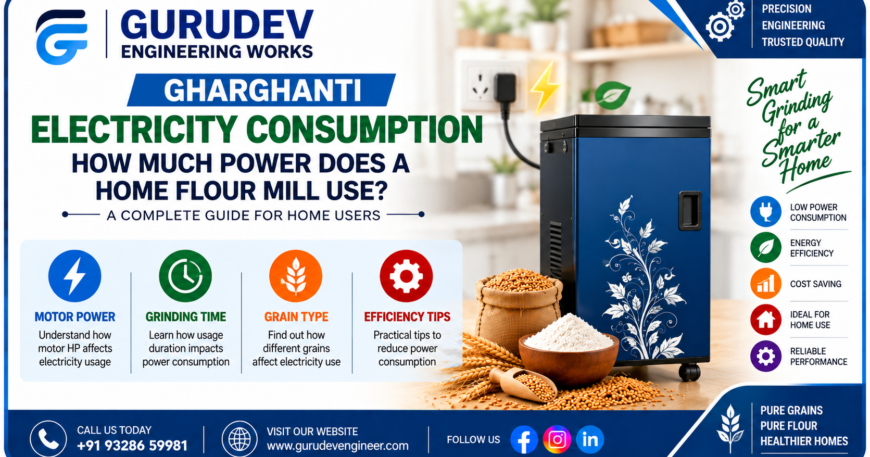
When choosing a gharghanti machine, many homeowners look at motor power, grinding capacity and machine features. Another important question is often overlooked: how much electricity does a gharghanti use?
Electricity consumption is an important consideration for any appliance used regularly at home.
A domestic flour mill uses an electric motor to operate its grinding mechanism. The actual electricity consumed depends on several factors, including the motor rating, operating time, grain type, machine load and usage pattern.
Therefore, simply looking at the motor’s HP rating does not tell the complete story.
In this guide, we explain the main factors that affect gharghanti electricity consumption and how you can use a home flour mill efficiently.
What Is Gharghanti Electricity Consumption?
Electricity consumption refers to the amount of electrical energy used by the machine while operating.
A gharghanti uses electricity primarily to power its motor and associated electrical components.
The total consumption depends on:
- Motor power
- Operating duration
- Grinding load
- Grain type
- Machine design
- Operating conditions
If the machine runs for a short period, its total electricity usage will naturally be different from a machine that operates for a longer period.
Does Motor HP Determine Electricity Consumption?
Motor power is an important factor, but it is not the only one.
A motor with a higher rated power can have a higher electrical input under certain operating conditions. However, actual energy consumption depends on how long the machine operates and the load placed on it.
For example:
Electricity usage depends on both power and time.
A machine that operates for a shorter period may use less total energy than a lower-powered machine that runs for much longer.
This is why buyers should consider the complete machine specification rather than focusing only on HP.
What Factors Affect Gharghanti Power Consumption?
Several factors can influence the electricity used by a domestic flour mill.
1. Motor Power
The motor is one of the primary electrical components of the machine.
Different gharghanti models may use different motor capacities depending on their intended application.
Always check the manufacturer’s specifications for the particular model.
2. Grinding Time
The longer a machine operates, the more electricity it can consume.
If your household grinds a small quantity of grain, the machine may only need to operate for a limited period.
Higher quantities naturally require more operating time.
Therefore, your household’s grinding frequency is an important factor.
3. Grain Type
Different grains have different physical characteristics.
Wheat, bajra, jowar, maize and rice may place different demands on a grinding system.
The machine’s operating load can therefore vary depending on the grain being processed.
Always use grains that are supported by the machine manufacturer.
4. Grain Condition
The condition of the grain can also affect grinding.
Grain quality, moisture and cleanliness can influence how easily the material passes through the grinding system.
Before grinding, remove stones, metal pieces and other foreign material.
Proper grain preparation supports smoother operation.
5. Machine Load
The load placed on the motor can affect operating performance.
Overloading a flour mill can place additional stress on the motor and mechanical components.
Follow the recommended feeding rate and operating capacity provided by the manufacturer.
Avoid trying to process more grain than the machine is designed to handle.
6. Operating Time and Household Usage
Two households may have completely different electricity usage even if they own the same gharghanti.
For example, one family may grind flour occasionally.
Another family may use the machine frequently.
This means electricity consumption should be considered based on actual household usage rather than simply comparing motor ratings.
How to Calculate Approximate Electricity Usage
A simple way to understand electricity consumption is:
Energy Used = Power × Operating Time
For example, if a machine has a particular electrical input rating and operates for a certain number of hours, its approximate energy usage can be estimated from those two values.
However, actual consumption can vary because motors do not necessarily operate at their maximum rated load throughout the entire grinding process.
For an accurate figure, check the machine’s electrical specifications or measure consumption using a suitable energy meter.
Does a Gharghanti Use a Lot of Electricity?
The answer depends on the machine and how it is used.
A domestic flour mill is generally operated for relatively limited periods rather than continuously throughout the day.
Therefore, total household electricity consumption depends strongly on:
- Quantity of grain
- Grinding frequency
- Motor rating
- Operating duration
- Machine load
Instead of asking only whether a machine uses “high” or “low” electricity, consider your actual usage pattern.
How to Use a Gharghanti More Efficiently
You can follow several simple practices to support efficient operation.
Use the Correct Grain
Only process grains recommended for the machine.
Avoid Overloading
Do not exceed the manufacturer’s recommended capacity.
Clean the Grain
Remove foreign material before grinding.
Keep the Machine Maintained
Regular inspection can help identify mechanical problems that may affect operation.
Follow the Correct Settings
Use the manufacturer’s recommended settings for different grains.
Avoid Unnecessary Running
Switch the machine off when grinding is complete instead of leaving it running without a load.
Can Maintenance Affect Electricity Usage?
Machine condition can influence operating efficiency.
A machine with mechanical problems may not operate as smoothly as intended.
Possible issues include:
- Excessive friction
- Worn components
- Misalignment
- Unusual vibration
- Mechanical resistance
If you notice unusual noise, vibration or repeated motor heating, stop operation and follow the manufacturer’s troubleshooting or service instructions.
Why Proper Ventilation Matters
The motor and electrical components need appropriate operating conditions.
Do not block the machine’s ventilation openings.
Keep the gharghanti in a suitable location with adequate surrounding space according to the manufacturer’s installation recommendations.
Excessive heat can affect electrical equipment and machine performance.
Gharghanti Electricity Consumption vs Machine Capacity
When buying a domestic flour mill, it is useful to consider the relationship between:
Motor Power + Capacity + Grinding Time + Household Requirement
A machine with a higher capacity may not necessarily be the right choice for every household.
Likewise, choosing a machine only because it has a lower motor rating may not be appropriate if your household requires frequent grinding.
The goal is to select a machine that matches your actual needs.
What Should You Check Before Buying?
Ask the manufacturer for:
- Motor rating
- Electrical input requirements
- Recommended capacity
- Operating instructions
- Suitable grains
- Recommended usage
- Warranty details
- Service support
These details can help you understand what to expect from the machine.
Why Choose Gurudev Engineering Works?
Gurudev Engineering Works focuses on precision engineering and flour milling solutions.
Our approach emphasizes:
- Quality components
- Precision manufacturing
- Reliable construction
- Practical machine design
- Consistent performance
Choosing the correct machine according to actual household requirements is an important part of getting reliable long-term performance.
Conclusion
Gharghanti electricity consumption depends on much more than motor HP.
Motor power, operating time, grain type, machine load, grain condition and usage frequency can all affect total electricity consumption.
If you want to understand the expected electricity usage of a particular machine, check its electrical specifications and consider how frequently your household will use it.
A properly selected and correctly operated home flour mill can provide convenient grain grinding while allowing you to manage its usage according to your household requirements.