

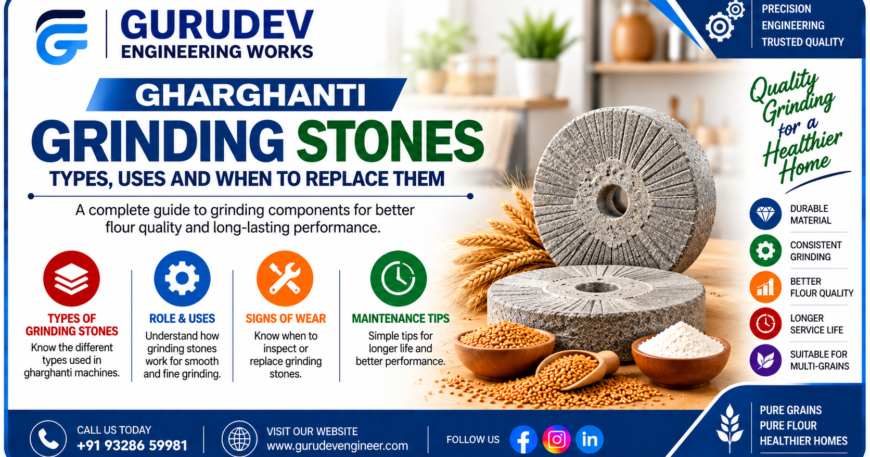
The grinding system is one of the most important parts of a gharghanti machine.
It is responsible for processing grain into flour, so the condition and design of the grinding components can directly affect the grinding process.
Depending on the machine design, domestic flour mills can use different types of grinding mechanisms and components. Some machines may use grinding stones, while others may use alternative grinding systems.
For this reason, users should always check the specific design of their machine before purchasing a replacement component.
In this guide, we explain the role of grinding components, how they can wear over time and what signs may indicate that inspection or replacement is needed.
What Is a Gharghanti Grinding Stone?
A grinding stone is a component used in certain flour mill designs to process grain.
The grinding action occurs when grain passes through the grinding area and is reduced into smaller particles.
The exact construction and material of the grinding component vary according to the machine design.
Some modern domestic flour mills use other types of grinding systems instead of traditional stone arrangements.
Therefore, always identify the exact component used in your machine before ordering a replacement.
Why Is the Grinding Component Important?
The grinding component plays an important role in the overall milling process.
Its condition can influence:
- Grinding performance
- Flour texture
- Machine operation
- Grinding consistency
- Maintenance requirements
A machine may have a reliable motor, but the grinding system must also be properly maintained for consistent operation.
How Does a Grinding Stone Work?
In a suitable machine design, grain enters the grinding area and is processed between the grinding surfaces.
The mechanical action reduces the grain into smaller particles.
The final result can depend on:
- Grinding component design
- Adjustment
- Grain type
- Grain condition
- Machine speed
- Feeding rate
This is why correct machine settings are important.
Different Grains and Grinding Components
Different grains have different physical characteristics.
For example:
- Wheat
- Bajra
- Jowar
- Maize
- Rice
may behave differently during grinding.
Not every grinding component is suitable for every grain.
Before processing a new grain, check the manufacturer’s specifications.
Signs That a Grinding Component May Need Inspection
A change in machine performance does not automatically mean the grinding stone needs replacement.
However, some signs may indicate that inspection is necessary.
1. Change in Flour Texture
If the flour becomes noticeably different from the normal result, check the machine settings and grain condition first.
If the problem continues, inspect the grinding components.
2. Reduced Grinding Performance
A noticeable change in grinding performance can have several causes, including component wear.
3. Unusual Noise
Unexpected mechanical noise should be investigated rather than ignored.
4. Excessive Vibration
Unusual vibration may indicate a mechanical issue that requires inspection.
5. Visible Damage
If a grinding component shows cracks, severe wear or other visible damage, stop using the machine until it has been properly checked.
How Long Does a Gharghanti Grinding Stone Last?
There is no single replacement interval that applies to every machine.
Service life depends on:
- Frequency of use
- Grain type
- Grain condition
- Machine design
- Operating method
- Component quality
- Maintenance
A household that uses its flour mill occasionally may experience a different component life compared with a household that uses it very frequently.
Therefore, replacement should be based on the manufacturer’s recommendations and the actual condition of the component.
Can Poor-Quality Grain Damage Grinding Components?
Foreign materials can create problems for a grinding system.
Before putting grain into a gharghanti, remove:
- Stones
- Metal pieces
- Dirt
- Other hard foreign objects
Using properly cleaned grain helps reduce the risk of unwanted material entering the grinding mechanism.
Can Grinding Settings Affect Component Life?
Yes.
The machine should always be operated according to its recommended settings.
Incorrect adjustment or operation outside the manufacturer’s specifications can place unnecessary stress on mechanical components.
If you are unsure about the correct setting, consult the machine manufacturer or service professional.
Cleaning Gharghanti Grinding Components
Cleaning requirements depend on the machine design.
Some components may be accessible for routine cleaning, while others may require professional service.
Follow the manufacturer’s cleaning instructions.
When cleaning:
- Switch off the machine
- Disconnect the power
- Allow moving components to stop completely
- Use the recommended cleaning method
- Avoid exposing electrical parts to unnecessary moisture
Safety should always come first.
Should You Replace or Repair a Grinding Stone?
This depends on the component and the type of damage.
A professional inspection can determine whether the component requires:
- Cleaning
- Adjustment
- Repair
- Replacement
Do not continue using a visibly damaged grinding component simply to avoid replacement.
How to Choose a Replacement Grinding Component
If your machine requires a replacement, confirm:
Exact Machine Model
Different machines can use different components.
Correct Dimensions
The replacement must match the manufacturer’s specifications.
Compatible Material
Use the component recommended for the machine.
Manufacturer or Supplier
Purchase from a reliable source that can confirm compatibility.
Installation
If installation requires technical work, use qualified assistance.
Why Genuine Gharghanti Spare Parts Matter
A replacement component should match the machine’s intended design.
Using an incorrect component can affect:
- Fit
- Alignment
- Grinding performance
- Machine operation
- Component life
Therefore, always verify compatibility before purchasing a gharghanti spare part.
Grinding Stone vs Other Grinding Systems
Modern flour mills can use different grinding technologies.
Some machines may use traditional stone-based systems, while others use different grinding mechanisms.
There is no universal system that is suitable for every application.
The right choice depends on:
- Machine design
- Grain type
- Intended use
- Capacity
- Desired output
This is why buyers should understand the machine’s grinding system before purchasing.
Why Gurudev Engineering Works?
Gurudev Engineering Works specializes in precision-engineered solutions for flour milling applications.
Our focus includes:
- Quality components
- Precision manufacturing
- Reliable construction
- Practical engineering
- Consistent performance
For flour mill owners and manufacturers, using correctly matched components is an important part of maintaining reliable machine operation.
Gharghanti Grinding Component Maintenance Checklist
Use this simple checklist:
Before grinding:
- Clean the grain
- Remove foreign material
- Check the machine condition
During operation:
- Follow the recommended capacity
- Use the correct settings
- Watch for unusual noise or vibration
After grinding:
- Clean accessible areas
- Remove residue as recommended
- Store the machine appropriately
During inspection:
- Check for visible damage
- Look for unusual wear
- Replace components when required
Conclusion
The grinding system is a key part of any gharghanti machine.
Some machines use grinding stones, while others use different grinding mechanisms. The correct component depends entirely on the machine’s design.
Regular cleaning, suitable grain preparation and correct operation can help maintain reliable grinding performance.
If you notice changes in flour texture, unusual noise, vibration or reduced grinding performance, inspect the machine and its grinding components according to the manufacturer’s recommendations.
When replacement is necessary, always select a compatible component designed for your specific gharghanti model.