
A gharghanti machine can be a useful appliance for regular home flour grinding. Like any mechanical machine, it needs proper cleaning and routine care to remain reliable.
Regular maintenance does not have to be complicated.
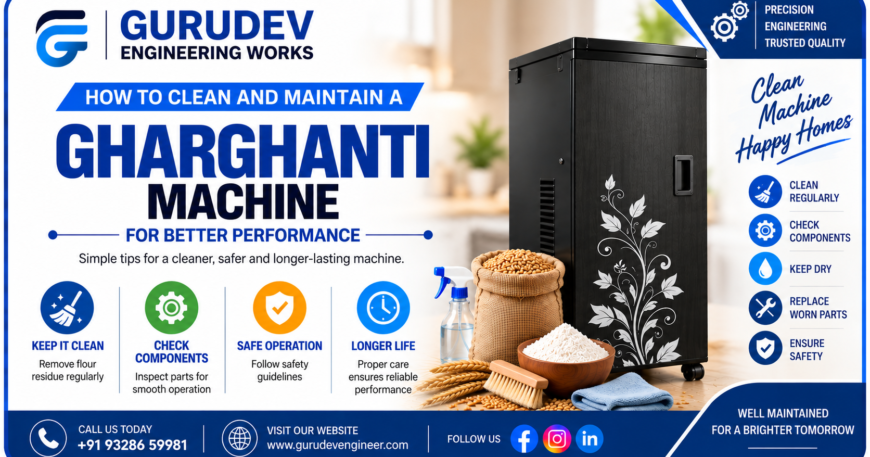
Simple habits such as cleaning flour residue, checking moving components, keeping the machine dry, and following the manufacturer’s instructions can make everyday operation easier.
Proper maintenance also helps you notice unusual noise, vibration, or wear before a small issue becomes a bigger problem.
In this guide, we explain how to clean and maintain a domestic flour mill safely and effectively.
Why Gharghanti Maintenance Is Important
A flour mill processes grain regularly. During operation, small amounts of flour and grain particles can collect around different areas of the machine.
Regular cleaning helps maintain:
- Better hygiene
- Convenient operation
- Proper airflow
- Clean machine surfaces
- Reliable performance
Routine inspection can also help identify mechanical issues early.
1. Switch Off the Machine Before Cleaning
Safety should always come first.
Before cleaning the gharghanti:
- Switch off the machine.
- Disconnect the power supply.
- Allow moving components to stop completely.
- Wait for the machine to cool if required.
Never clean internal or moving components while the machine is connected to power.
Always follow the manufacturer’s safety instructions.
2. Remove Remaining Flour
After grinding, flour particles may remain around the grinding and collection areas.
Use the cleaning method recommended by the manufacturer.
A soft brush can be useful for removing dry flour from accessible areas.
Avoid forcing tools into areas that are not designed for user cleaning.
3. Clean the Flour Collection Area
The flour collection area should be cleaned regularly.
Remove remaining flour before the next grinding session.
This helps prevent old flour from mixing with freshly processed flour.
Keep containers and collection surfaces clean and dry.
4. Keep the Machine Dry
Moisture should be avoided around electrical and mechanical components.
Do not use excessive water inside the machine.
If the external cabinet needs cleaning, use an appropriate slightly damp cloth and follow the manufacturer’s instructions.
Make sure the machine is completely dry before reconnecting it to power.
5. Clean the Grinding Area Properly
The grinding chamber is one of the most important areas to maintain.
Flour and grain particles can accumulate over time.
Follow the manufacturer’s recommended cleaning procedure.
Do not dismantle internal components unless the machine manual specifically allows it or the work is being performed by a qualified technician.
6. Check for Unusual Noise
Pay attention to changes in machine sound.
A new grinding, rattling, or unusual mechanical noise may indicate a problem.
Possible causes can include:
- Loose components
- Worn bearings
- Misalignment
- Foreign material
- Component wear
If unusual noise continues, stop using the machine and arrange an inspection.
7. Watch for Excessive Vibration
A properly installed machine should operate in a stable manner.
If vibration suddenly increases, inspect the machine.
Possible causes may include:
- Improper installation
- Loose fasteners
- Rotating component imbalance
- Worn components
Do not ignore sudden changes in vibration.
8. Check Belts and Drive Components
If your gharghanti uses belts or other drive components, inspect them according to the manufacturer’s maintenance schedule.
Look for:
- Visible wear
- Cracks
- Looseness
- Unusual noise
- Slipping
Do not adjust or replace components unless you understand the correct procedure.
9. Inspect Bearings and Moving Components
Bearings support rotating parts and are important for smooth operation.
Signs that a bearing may require attention include:
- Unusual noise
- Excessive heat
- Vibration
- Rough operation
If you notice these signs, have the machine inspected.
10. Keep the Grain Clean
Machine maintenance begins before the grain enters the machine.
Always remove unwanted materials such as:
- Stones
- Metal pieces
- Dirt
- Other hard foreign objects
Using clean grain helps reduce the risk of damage to the grinding system.
11. Don’t Overload the Machine
Every gharghanti has a recommended operating capacity.
Do not continuously feed more grain than the machine is designed to handle.
Overloading can place additional stress on:
- Motor
- Grinding system
- Bearings
- Drive components
Follow the manufacturer’s operating recommendations.
12. Use the Correct Grinding Settings
Different grains may require different settings.
Always use the settings recommended for your specific machine and application.
Incorrect adjustment can affect operation and increase unnecessary wear.
13. Maintain the Exterior Cabinet
The cabinet is the visible part of the machine and also protects internal components.
Clean the exterior regularly with a suitable method.
Avoid harsh chemicals or abrasive materials that could damage the finish.
A clean cabinet also makes it easier to notice cracks, loose panels, or other visible issues.
14. Check Electrical Connections
Electrical maintenance should be taken seriously.
Watch for:
- Damaged cables
- Loose connections
- Burning smell
- Sparking
- Unusual electrical noise
If you notice any electrical problem, stop using the machine and contact a qualified technician.
Do not attempt unsafe electrical repairs yourself.
Simple Gharghanti Maintenance Schedule
After Every Use
- Remove remaining flour
- Clean accessible surfaces
- Keep the collection area clean
Regularly
- Inspect visible components
- Check for unusual noise
- Check vibration
- Clean the cabinet
Periodically
- Inspect belts and bearings
- Check important fasteners
- Follow the manufacturer’s service recommendations
When Required
- Replace worn components
- Repair damaged electrical parts
- Get professional inspection
Common Maintenance Mistakes
Using Too Much Water
Excess moisture can create problems around electrical components.
Ignoring Unusual Sounds
Small changes can indicate developing mechanical issues.
Overloading the Machine
Continuous overloading can increase stress on the system.
Using Improper Cleaning Tools
Sharp or unsuitable tools can damage components.
Unauthorized Disassembly
Opening internal assemblies without proper knowledge can create additional problems.
When Should You Call a Technician?
Professional assistance is recommended when you notice:
- Strong vibration
- Burning smell
- Electrical sparks
- Motor problems
- Repeated overheating
- Damaged internal components
- Significant reduction in performance
If a problem is beyond routine cleaning, professional inspection is safer than attempting an unknown repair.
How Proper Care Can Extend Machine Life
Regular maintenance helps you identify wear before it becomes severe.
For example, detecting a loose component early may prevent additional damage to nearby parts.
Similarly, keeping the machine clean and operating it within its recommended capacity can reduce unnecessary stress.
Maintenance cannot prevent every failure, but it can support reliable operation and help keep the machine in good working condition.
Why Choose a Manufacturer With Spare Parts Support?
A domestic flour mill is a long-term machine.
Over time, some components may naturally require replacement.
A manufacturer that provides spare parts support can make ownership easier.
Before buying, ask whether replacement components are available for your machine model.
This is especially useful for machines that are used regularly.
Why Gurudev Engineering?
Gurudev Engineering Works focuses on precision engineering and flour milling solutions.
Our approach emphasizes quality components, accurate manufacturing, and reliable machine performance.
For a domestic flour mill, good manufacturing is only one part of long-term ownership. Proper operation and regular care are equally important.
Conclusion
Regular gharghanti machine maintenance does not have to be difficult.
Simple practices such as cleaning flour residue, keeping the machine dry, using clean grain, avoiding overload, and checking for unusual noise or vibration can help maintain reliable operation.
Always follow the specific instructions provided with your machine because maintenance requirements can vary between models.
With proper cleaning, safe operation, and timely professional service, your home atta chakki can remain a useful part of your household for a long time.