
Flour milling is a continuous industrial process where machine reliability directly affects production, product quality, and profitability. A flour mill may operate for long hours every day, placing constant stress on components such as cutters, rings, rollers, shafts, jalis, liners, and other precision-engineered parts.
When these components are not inspected and maintained properly, small problems can develop into major machine failures. Unexpected breakdowns can stop production, delay customer orders, increase repair expenses, and reduce overall efficiency.
This is why preventive maintenance of flour mill parts is essential for every modern milling operation.
Preventive maintenance involves regularly inspecting, cleaning, lubricating, adjusting, and replacing components before they fail. Instead of waiting for a machine part to break, maintenance teams identify potential problems early and take corrective action.
What Is Preventive Maintenance?
Preventive maintenance is a planned approach to keeping machinery in good operating condition.
Instead of repairing equipment only after a breakdown, operators regularly check important components for signs of:
- Wear
- Cracks
- Corrosion
- Looseness
- Misalignment
- Excessive vibration
- Overheating
- Surface damage
The goal is simple: identify problems before they cause production downtime.
Why Flour Mill Parts Require Regular Maintenance
Flour mill machinery operates under demanding conditions. Components may experience continuous:
- Friction
- Mechanical pressure
- Vibration
- Heat
- Dust exposure
- Repetitive movement
Over time, these conditions can cause components to wear.
Even a small amount of wear can affect the performance of connected components. Therefore, regular inspection is important for maintaining machine efficiency.
1. Regularly Inspect High-Wear Components
Some flour mill parts experience more wear than others.
These may include:
- Blade Cutters
- Liner Cutters
- Rings
- Rollers
- Shafts
- Jali
- Bushes
- Bearings
Inspect these components according to your machine manufacturer’s maintenance schedule.
Look for visible damage, excessive wear, cracks, deformation, or unusual surface conditions.
2. Check for Unusual Vibration
Excessive vibration is an important warning sign.
It can be caused by:
- Misaligned components
- Worn bearings
- Damaged rotating parts
- Loose fasteners
- Improper fitting
- Unbalanced components
Ignoring unusual vibration can increase wear on other machine parts.
Early inspection can help prevent larger mechanical problems.
3. Monitor Unusual Machine Noise
Changes in operating noise can also indicate developing problems.
Grinding, knocking, rattling, or unusual mechanical sounds may indicate that a component needs inspection.
Operators should not ignore sudden changes in normal machine sound.
Identifying the source early can prevent unnecessary downtime.
4. Keep Components Clean
Flour dust and other particles can accumulate around machine components.
Regular cleaning helps:
- Maintain proper operation
- Improve visibility during inspection
- Reduce contamination
- Detect wear earlier
- Maintain a cleaner working environment
Cleaning procedures should always follow appropriate machine safety requirements.
5. Lubricate Components Properly
Some moving components require lubrication to reduce friction and wear.
Insufficient or incorrect lubrication can result in:
- Increased friction
- Heat generation
- Faster component wear
- Reduced efficiency
- Premature failure
Always use the recommended lubricant and follow the machine manufacturer’s instructions.
6. Check Component Alignment
Correct alignment is essential for rotating and moving components.
Poor alignment can cause:
- Excessive vibration
- Uneven wear
- Increased friction
- Reduced component life
- Higher maintenance requirements
During scheduled maintenance, important components should be checked for proper alignment and fitment.
7. Replace Worn Parts Before Failure
One of the most important preventive maintenance practices is timely replacement.
Waiting until a component completely fails can create additional problems.
For example, a worn component may damage nearby parts or affect machine alignment.
Replacing a component before complete failure can help minimize unexpected downtime.
8. Use Quality Flour Mill Spare Parts
Maintenance is only effective when replacement components are reliable.
Low-quality spare parts may:
- Wear faster
- Fit incorrectly
- Increase vibration
- Require frequent replacement
- Affect machine performance
Using precision-engineered components from a reliable flour mill parts manufacturer can improve reliability.
9. Maintain a Maintenance Schedule
A structured maintenance schedule helps ensure that inspections are not missed.
A basic maintenance plan can include:
Daily Checks
- Unusual noise
- Vibration
- Visible damage
- Cleanliness
Weekly Checks
- Fasteners
- Lubrication
- Component condition
- Alignment
Periodic Checks
- Wear measurements
- Detailed component inspection
- Replacement planning
- Overall machine servicing
The exact schedule should depend on the machine, operating hours, load, and manufacturer’s recommendations.
Benefits of Preventive Maintenance
Reduced Downtime
Early detection helps prevent unexpected failures.
Longer Component Life
Proper maintenance reduces unnecessary wear.
Better Machine Efficiency
Well-maintained components can support smoother machine operation.
Lower Maintenance Costs
Planned replacement is generally easier to manage than emergency repairs.
Consistent Production
Reliable machinery helps maintain stable production.
Improved Safety
Regular inspection can help identify potentially hazardous mechanical conditions.
How Quality Parts Support Preventive Maintenance
Maintenance and component quality work together.
A high-quality flour mill part manufactured with appropriate materials and accurate dimensions can provide reliable service when properly installed and maintained.
At Gurudev Engineering, precision manufacturing focuses on producing flour mill components designed for accurate fitting, durability, and consistent performance.
Our product range includes components such as:
- Flour Mill Drum
- Blade Cutter
- Ring
- Jali
- Liner Cutter
- Door Lock Knob
- Varam
- Shafts
- Rollers
- Customized Components
Conclusion
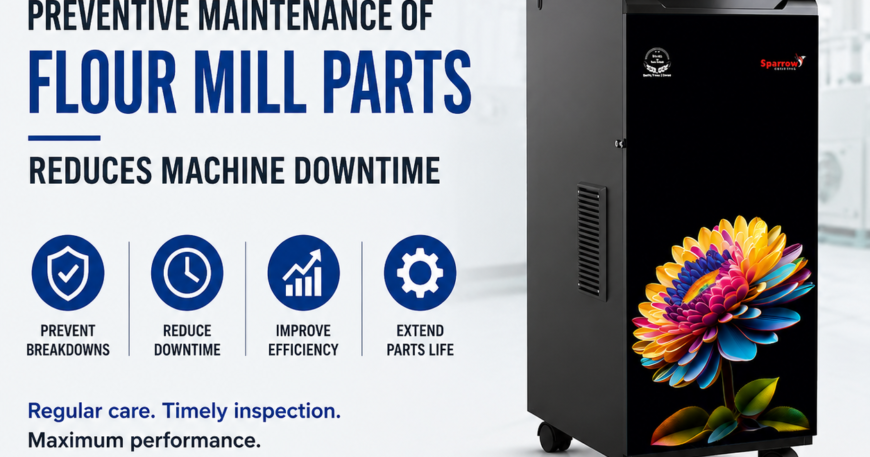
Preventive maintenance is one of the most effective ways to reduce flour mill machine downtime. Regular inspection, proper lubrication, alignment checks, cleaning, and timely replacement of worn components can help maintain reliable machine performance.
However, maintenance should always be combined with quality replacement components.
By choosing precision-engineered flour mill spare parts and following a structured maintenance schedule, milling businesses can improve equipment reliability, reduce unexpected failures, and maintain consistent production.
Gurudev Engineering provides precision-manufactured flour mill parts designed to support reliable and efficient milling operations.